

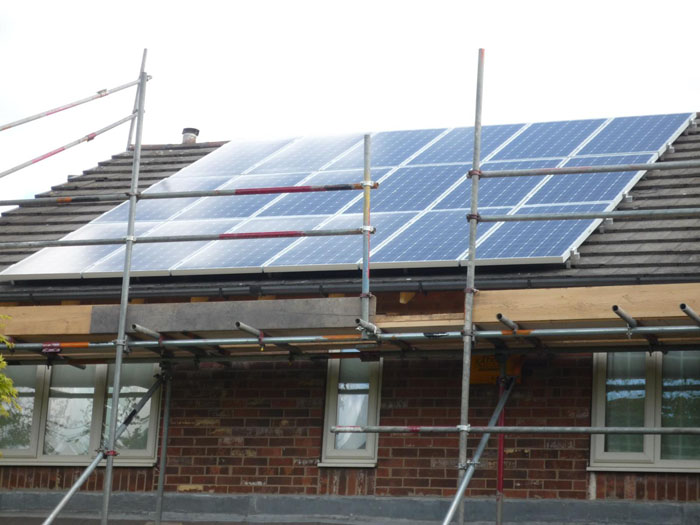
I. Priorizar la distribución de la carga para evitar la concentración de presión en puntos únicos.
La capacidad portante de las losas de techo antiguas suele ser débil, y su capacidad de carga localizada es extremadamente baja. Si los soportes de montaje y los contrapesos se concentran en el centro o en las zonas débiles de la losa, pueden provocar fácilmente deformaciones y grietas, lo que supone importantes riesgos para la seguridad.
Al instalar sistemas de montaje fotovoltaico En cubiertas antiguas, es fundamental respetar estrictamente el principio de distribución de cargas: todas las bases de montaje y de contrapeso deben estar alineadas con precisión con las vigas, correas y muros de carga situados bajo la cubierta. Esto garantiza que el peso del sistema de montaje, los módulos y los contrapesos se transfiera directamente a la estructura portante principal del edificio, evitando así la concentración de presión en las losas en voladizo o en las zonas débiles de la cubierta.
Al mismo tiempo, está estrictamente prohibido instalar soportes en grupos densos; en su lugar, debe utilizarse una disposición de matrices distribuidas uniformemente para equilibrar la tensión general sobre el techo, reduciendo así el riesgo de sobrecarga y deformación del techo en la fuente.
II. Priorizar la protección de la capa impermeabilizante existente para eliminar futuros riesgos de filtraciones.
Los problemas más comunes en techos antiguos incluyen: capas impermeabilizantes deterioradas, membranas de cubierta quebradizas y mala adherencia, factores que los hacen altamente susceptibles a sufrir daños por fricción y compresión. Los soportes convencionales entran en contacto directo con la superficie del techo; con el tiempo, la dilatación y contracción térmica, así como las vibraciones provocadas por el viento, generan una fricción continua contra la capa impermeabilizante, lo que provoca grietas, descamación y filtraciones de agua en tan solo 1 o 2 años.
Requisitos de construcción estándar: Todas las bases de los soportes y la parte inferior de los contrapesos deben estar equipadas con almohadillas de goma y una capa barrera de tela no tejida para garantizar un contacto flexible. Esta capa barrera amortigua eficazmente la presión de los soportes y evita que las bases metálicas rocen directamente con la capa impermeabilizante del techo, eliminando así problemas posteriores a la instalación, como daños en la impermeabilización, grietas localizadas y filtraciones de agua durante la lluvia, y maximizando la conservación de la integridad de la impermeabilización original del techo.
III. Instale según sus posibilidades; no cubra todo el techo con paneles indiscriminadamente.
Muchos propietarios, en su afán por maximizar la generación de energía, insisten en cubrir todo el tejado con paneles solares, ignorando la capacidad de carga de los tejados antiguos. Este es el mayor error de seguridad en los proyectos de modernización solar. Las estructuras de tejados antiguos tienen un rendimiento limitado y no cumplen con los estándares de carga de los tejados nuevos. Forzar una instalación completa aumentará significativamente las cargas estructurales y creará riesgos de seguridad a largo plazo.
El principio fundamental para instalar paneles solares en techos antiguos es: primero, evaluar la capacidad de carga y, a continuación, determinar la capacidad instalada. Reduzca razonablemente el tamaño de la instalación en función de la capacidad de carga real del techo. Priorice la instalación de paneles en áreas con suficiente capacidad de carga y estructuras estables, evitando áreas débiles, antiguas o estructuralmente inadecuadas. Es preferible reducir la capacidad instalada a comprometer la seguridad y la estabilidad de la estructura del techo durante los próximos 25 años.
IV. Repare y refuerce primero, luego instale el sistema; no intente compensar por la fuerza los defectos estructurales.
Los sistemas de montaje fotovoltaico pueden optimizar la distribución de la carga y reducir la carga estructural, pero no pueden reparar estructuras de edificios que ya están envejecidas o dañadas. Si el techo presenta problemas evidentes, como grietas en la losa del piso, deterioro de las paredes, elementos estructurales podridos, oxidación extensa y deformación de los paneles de techo de acero con recubrimiento de color, o hundimiento del techo, esto indica que el edificio ya no cumple con los requisitos para la instalación fotovoltaica.
Está estrictamente prohibido instalar sistemas de montaje fotovoltaico directamente sobre techos envejecidos; no se debe recurrir a sistemas de montaje ligeros para compensar a la fuerza los defectos estructurales. El procedimiento correcto es el siguiente: primero, inspeccionar, reforzar y reparar. Solo después de completar las reparaciones estructurales del techo, la eliminación del óxido, el refuerzo y la impermeabilización, se debe instalar el sistema fotovoltaico, eliminando así los riesgos de colapso, filtraciones de agua y fallas estructurales en su origen.
Add : 606, No. 12, Huasheng Road, Huli District, Xiamen,China
WhatsApp : +86153 9592 2968
Correo electrónico : info@powerack.com



 español


